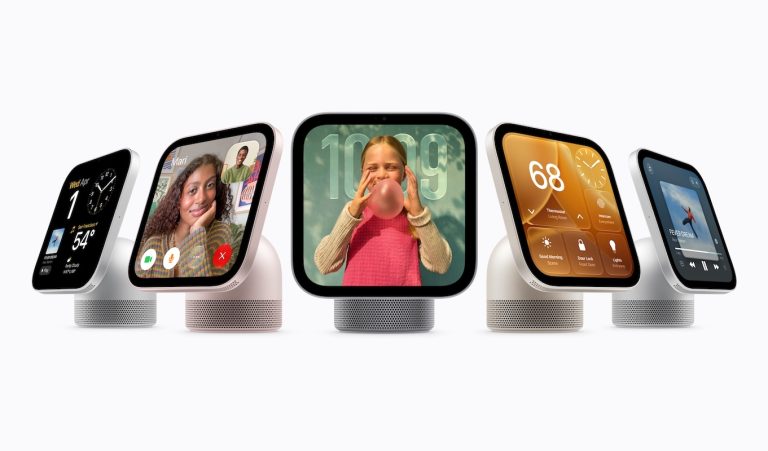

Apple has announced a redesigned iPad mini with an A20 Pro chip, a larger 8.5-inch OLED display, and a thinner, lighter, water-resistant body. Pre-orders opened on October 28, and the new model arrives in stores and on doorsteps starting November 6. It’s a much bigger change than the 2024 update, which left the design alone and swapped in an A17 Pro chip for Apple Intelligence.
It’s also more expensive. The iPad mini now starts at $699 for the 128 GB Wi-Fi model and $849 with cellular. That’s $100 more than the $599 Apple charged for the A17 Pro model after its June 25 price increase, and $200 more than that model’s $499 launch price in 2024. (College students and educators pay $649 through Apple’s education store, and Canadian prices start at C$949.) At these prices, it pays to choose the configuration carefully, because three details on the order page are easy to miss.
What You Get
The OLED display is the headline feature. OLED provides much deeper blacks than the old LED-backlit screen, and Apple says the 8.5-inch display fits in essentially the same footprint as the previous 8.3-inch one thanks to thinner bezels. Brightness rises to 600 nits for ordinary content (up from 500), with peaks of 1200 nits reserved for HDR video and photos. Apple doesn’t claim a faster refresh rate: its comparison chart says the iPad mini has no ProMotion, unlike the iPad Pro. Apple says it has more memory inside, but it doesn’t say how much.
Just as welcome for anyone who carries an iPad mini all day, the new model is 5.4 mm thick and weighs 255 grams (263 grams with cellular), compared to 6.3 mm and 293 grams for the A17 Pro model. It’s also rated IP67 for water and dust resistance (up to 1 meter for 30 minutes), which the A17 Pro model lacked, though Apple’s warranty still doesn’t cover liquid damage. The 12-megapixel front camera has moved to the long landscape edge, so during video calls you’ll be looking at the camera when the iPad mini is turned sideways. Wi-Fi 7 (if you have a Wi-Fi 7 router) and Apple’s C2 cellular modem should speed up connections. Touch ID remains in the top button, and the USB-C port is still limited to 10 Gbps. Color options shrink to midnight and starlight, down from four on the A17 Pro.
As for accessories, both the Apple Pencil Pro ($129) and the Apple Pencil (USB-C) ($79) work, as they did with the A17 Pro model, so an existing pencil carries over. Because the dimensions changed, don’t assume an old case or Smart Folio will fit; Apple sells a new $79 Smart Folio. There’s no Magic Keyboard for the iPad mini, either, since Apple lists only Bluetooth keyboards. Finally, the 20-watt adapter in the box won’t deliver the advertised fast charging (50% in about 30 minutes), which requires a USB-C adapter rated at 35 watts or more.
Which Storage Tier?
Ordering gets confusing because Apple uses the same chip name at every tier, but not the same chip, and it measures its claim of “up to 60 percent faster performance than the previous model” on the 6-core CPU that only the 512 GB model gets. The 128 GB and 256 GB models have a 5-core CPU (two of what Apple calls super cores plus three efficiency cores), which is one core fewer than the 6-core A17 Pro in the iPad mini they replace.
- 128 GB ($699, $849 cellular): A 5-core CPU, a 7-core GPU, and a 16-core Neural Engine. The nano-texture glass option isn’t available.
- 256 GB ($799, $949 cellular): The same 5-core chip. Nano-texture glass, which cuts glare in bright light, adds $100.
- 512 GB ($999, $1149 cellular): The only model with a 6-core CPU and Apple’s Dual 16-core Neural Engine, which matters mostly for on-device AI apps (the 7-core GPU is the same at every tier). With nano-texture glass and cellular, it reaches $1249.
For most people, we still recommend the 256 GB model, since 128 GB fills up quickly with photos, offline video, and downloaded maps, and 256 GB is the least expensive way to get nano-texture glass if you plan to use the iPad mini outdoors or under harsh office lighting. That advice rests on storage and glass, not speed, because Apple hasn’t published performance figures for the 5-core models. We expect them to be plenty fast for reading, email, notes, and video calls, but pay for 512 GB if you need the storage or run AI-heavy apps like Draw Things, which Apple cites.
Cellular Means eSIM
Cellular models use eSIM only and have no SIM card tray. That isn’t new with this model (the A17 Pro iPad mini was also eSIM-only), but it will surprise anyone coming from a sixth-generation or older iPad mini who planned to move a physical SIM card over. According to Apple’s carrier list, AT&T, T-Mobile, Verizon, Boost Mobile, FirstNet, GCI, and Puretalk support eSIM on the iPad in the United States, as do Bell, Fido, Rogers, Telus, and Virgin Mobile in Canada. Several carriers on the list, including Xfinity Mobile, Spectrum Mobile, and SaskTel, aren’t marked as supporting eSIM, and the list predates the new model, so confirm with your carrier before ordering. If your organization provisions iPads in bulk with physical SIM cards, talk with your carrier and us about eSIM activation before buying a batch.
Should You Upgrade?
If your A17 Pro iPad mini does what you need, there’s no reason to spend $699 or more to replace it. The upgrade makes sense if the old LCD screen bothers you, if you’d appreciate a lighter iPad mini, or if it lives in a kitchen, workshop, truck, or anywhere else it might get wet. Owners of a sixth-generation or earlier iPad mini will notice a much bigger difference. Don’t buy it just for Siri AI, either, since Apple still labels that feature a beta in iPadOS 27.2 and doesn’t offer it in the EU. If you want the new iPad mini in hand on November 6, pre-order now, and if you’d like help choosing between configurations or setting up eSIM on a new iPad, please get in touch.
(Featured image by Apple)
Social Media: Apple’s redesigned iPad mini adds an OLED screen, water resistance, and an A20 Pro chip, but it starts at $699, and only the 512 GB model gets the full CPU and Neural Engine. Here’s which configuration to buy and what to check first.